In the world of digital marketing, SEO (Search Engine Optimization) is not just a buzzword; it’s a necessity. If you want your content to be seen by your target audience, it must be optimized for search engines. But SEO can feel like a moving target, with constantly changing algorithms and new best practices. In this guide, we’ll walk you through everything you need to know to optimize your content for SEO effectively.
What is SEO Content Optimization?
The Basics of SEO
SEO is all about making your website and content more visible to people using search engines like Google, Bing, or Yahoo. It involves a combination of strategies, including keyword usage, content quality, site performance, and backlinks, all aimed at increasing your ranking in search engine results pages (SERPs).
Why SEO Matters for Your Content
Without SEO, even the best content can get lost in the vast expanse of the internet. SEO helps search engines understand what your content is about and why it’s valuable, making it more likely to appear when people search for relevant topics.
The Importance of Keywords
Finding the Right Keywords
Keywords are the phrases and terms that people type into search engines. Researching and selecting the right keywords is crucial for your content strategy. Use tools like Google Keyword Planner or SEMrush to discover which keywords your target audience is searching for.
Integrating Keywords Naturally
Once you have your keywords, it’s essential to integrate them naturally into your content. Overusing keywords, also known as “keyword stuffing,” can harm your SEO efforts. Instead, place keywords in critical areas like headings, the first 100 words, and throughout your content in a way that feels organic.
On-Page SEO Strategies
Crafting an Engaging Title
The Role of Keywords in Titles
Your title is one of the first things both search engines and users see. Including your primary keyword in the title can significantly improve your chances of ranking higher in search results.
How to Write a Catchy Title
A catchy title grabs attention while also being informative. Aim for a balance of creativity and clarity, ensuring that your title tells readers what to expect from your content.
Meta Descriptions: Your First Impression
Writing Persuasive Meta Descriptions
A meta description is a brief summary of your content that appears under the title in search results. Writing a compelling meta description can increase click-through rates (CTR) by convincing users that your content is what they need.
Including Keywords in Meta Descriptions
Like titles, meta descriptions should include your primary keyword. However, focus on making it engaging and informative rather than stuffing it with keywords.
Headings and Subheadings for SEO
Structuring Content with Headers
Headings (H1, H2, H3, etc.) help structure your content,making it easier for readers to navigate and for search engines to understand the hierarchy of your information.
The Impact of H1, H2, H3 Tags on SEO
Search engines use heading tags to assess the relevance and organization of your content. Properly structured headings can improve your chances of ranking higher by making your content more readable and organized.
Writing High-Quality Content
Content Relevance and User Intent
Addressing Your Audience’s Needs
To create content that ranks, you must understand what your audience is looking for. Addressing user intent means your content should directly answer the questions or needs that led users to your site in the first place.
Creating Valuable and Informative Content
High-quality content is informative, engaging, and offers value. Instead of writing just for SEO, focus on providing in-depth information that benefits your audience. Search engines reward content that satisfies users’ queries comprehensively.
Maintaining Readability and Engagement
Using Simple Language and Short Sentences
Readable content is crucial for keeping your audience engaged. Use simple language and break up complex ideas into shorter sentences and paragraphs. Avoid jargon and write in a conversational tone to make your content approachable.
Incorporating Bullet Points and Lists
Breaking down information into bullet points or numbered lists can enhance readability. These formats make content scannable, allowing users to quickly grasp key points, which improves user experience and SEO performance.
Off-Page SEO and Content Optimization
The Power of Backlinks
Earning Quality Backlinks
Backlinks, or links from other websites to your content, are like votes of confidence in the eyes of search engines. Earning backlinks from reputable, relevant sites can significantly boost your SEO.
How Backlinks Influence SEO
Backlinks tell search engines that your content is trustworthy and authoritative. The more high-quality backlinks you have, the better your content is likely to rank in search results.
Social Media and Content Distribution
Sharing Content for Maximum Reach
Promoting your content on social media platforms can increase its visibility and drive traffic to your website. The more people engage with and share your content, the more likely it is to attract backlinks and improve your SEO.
The Role of Social Signals in SEO
While the direct impact of social signals on SEO is debated, there’s no denying that content shared on social media often leads to increased traffic and engagement. These factors can indirectly benefit your SEO by increasing your content’s relevance and authority.
Technical SEO Considerations
Mobile Optimization
Why Mobile-Friendly Content Matters
With the increasing use of mobile devices for browsing, having mobile-friendly content is crucial. Search engines prioritize mobile-optimized content, meaning that your content must be responsive and easy to navigate on smartphones and tablets.
Ensuring Your Content Is Responsive
Ensure your website is designed to adapt to various screen sizes. Test your site on different devices to ensure that your content displays correctly and that users have a smooth experience.
Site Speed and Performance
How Slow Loading Times Affect SEO
Site speed is a critical ranking factor for search engines. Slow loading times can lead to higher bounce rates, meaning users leave your site before it fully loads, which negatively affects your SEO.
Optimizing Images and Code for Speed
Large images and poorly optimized code can slow down your site. Compress images, minify code, and use a content delivery network (CDN) to ensure your site loads quickly, improving both user experience and SEO performance.
Conclusion
SEO is not a one-time task but an ongoing process that requires continuous effort and adaptation. As search engine algorithms evolve, so must your content optimization strategies. The key to successful SEO is balancing user experience with search engine requirements. By focusing on quality content, strategic keyword use, and technical optimization, you can improve your site’s visibility and drive more traffic.
FAQs
How Often Should I Update My Content for SEO?
Regularly updating your content keeps it relevant and fresh. Consider revisiting and optimizing your content every 6-12 months to ensure it remains competitive.
What Are Long-Tail Keywords and Why Are They Important?
Long-tail keywords are more specific keyword phrases that typically have lower search volume but higher intent. They’re essential for targeting niche audiences and improving conversion rates.
Can I Optimize Existing Content for SEO?
Yes, you can! Auditing and updating existing content with new keywords, updated information, and improved readability can boost your rankings.
How Does SEO Differ for Different Types of Content?
SEO strategies can vary depending on content types. For instance, optimizing a blog post might involve different tactics than optimizing a product page or a video.
What Tools Can Help Me Optimize My Content for SEO?
There are many SEO tools available, including Google Analyticshttps://analytics.google.com/, SEMrush, Yoast SEO (for WordPress), and Ahrefs, that can help you optimize your content and monitor your SEO performance.
Brief overview of the importance of customer engagement.
Introduction to chatbots and their rise in popularity.
Thesis statement: How chatbots have transformed customer engagement.
What Are Chatbots?
Definition of chatbots.
Different types of chatbots: rule-based vs. AI-powered chatbots.
The Importance of Customer Engagement
Why customer engagement matters for businesses.
Traditional methods of customer engagement.
The evolving needs of the modern customer.
The Role of Chatbots in Customer Engagement
How chatbots enhance customer experiences.
Key chatbot features that improve engagement (e.g., instant responses, 24/7 availability).
Real-world examples of successful chatbot implementations.
Benefits of Using Chatbots for Customer Engagement
24/7 Customer Support
How chatbots provide continuous support.
The impact on customer satisfaction.
Personalized Experiences
Customization of responses and interactions.
Using AI to understand customer preferences.
Efficiency and Speed
How chatbots reduce wait times and streamline customer service.
Scalability
Handling multiple queries simultaneously.
Cost savings for businesses.
Challenges of Implementing Chatbots
Technical Challenges
Integration with existing systems.
The complexity of AI training.
Customer Resistance
Addressing customer concerns about automation.
Balancing automation with the human touch.
Data Privacy and Security
Ensuring compliance with regulations.
Protecting customer data in automated interactions.
Best Practices for Using Chatbots in Customer Engagement
Designing Conversational Flows
Creating natural and engaging chatbot interactions.
Personalization and Customization
Using data to tailor chatbot responses.
Regular Updates and Improvements
Continuously training and refining chatbot systems.
Human Escalation Options
Ensuring seamless handoff to human agents when needed.
Industries Benefiting Most from Chatbots
Retail and E-commerce
Chatbots for product recommendations and customer support.
Banking and Finance
Automating routine transactions and inquiries.
Healthcare
Appointment scheduling and patient information.
Travel and Hospitality
Enhancing customer service through quick responses.
Measuring the Success of Chatbots
Key performance indicators (KPIs) for chatbot performance.
Analyzing customer feedback and chatbot analytics.
Future Trends in Chatbot Technology
Advancements in AI and natural language processing (NLP).
The growing use of voice-activated chatbots.
Integration with other emerging technologies like AR/VR.
Conclusion
Recap of the key benefits of using chatbots for customer engagement.
Final thoughts on the future of chatbot technology in business.
FAQs
How do chatbots improve customer engagement?
Can chatbots handle complex customer queries?
Are chatbots secure for handling sensitive customer data?
How do businesses measure the effectiveness of their chatbots?
What industries benefit most from chatbot usage?
Using Chatbots for Customer Engagement
Customer engagement is the lifeblood of any succhttps://sparrowdigit.comessful business. In today’s fast-paced, digital world, businesses are constantly seeking innovative ways to interact with their customers. This is where chatbots come into play. These digital assistants are revolutionizing the way companies engage with their audience, providing real-time support and personalized experiences. In this article, we’ll explore how chatbots are transforming customer engagement and why they have become an essential tool for businesses of all sizes.
What Are Chatbots?
Before diving into their impact on customer engagement, let’s clarify what chatbots are. Chatbots are software applications designed to simulate human conversation. They interact with users through text or voice, offering automated responses to inquiries or performing specific tasks.
There are two main types of chatbots: rule-based and AI-powered. Rule-based chatbots follow predefined scripts and are great for handling simple, straightforward queries. AI-powered chatbots, on the other hand, use artificial intelligence and machine learning to understand and respond to more complex interactions. They can learn from previous conversations, making them more effective over time.
The Importance of Customer Engagement
Why is customer engagement so important? Engaged customers are more likely to be loyal, make repeat purchases, and even become brand advocates. In an era where customer expectations are constantly rising, businesses need to go above and beyond to keep their audience engaged. Traditional methods, like phone support and email, are no longer enough. Today’s customers expect instant responses and seamless interactions, which is where chatbots can make a significant difference.
The Role of Chatbots in Customer Engagement
Chatbots have rapidly become an integral part of customer engagement strategies. They are designed to provide fast, efficient, and personalized interactions, which enhances the overall customer experience. One of the key advantages of chatbots is their ability to offer 24/7 support, allowing customers to get help at any time, from anywhere. This instant availability meets the modern consumer’s demand for quick solutions, reducing frustration and increasing satisfaction.
For example, imagine a customer browsing an online store late at night. They have a question about a product but can’t find the information they need. Instead of waiting for a response from customer service the next day, they can use a chatbot to get an immediate answer. This level of accessibility significantly boosts engagement and can even lead to higher conversion rates.
Benefits of Using Chatbots for Customer Engagement
24/7 Customer Support
One of the most significant benefits of chatbots is their ability to provide around-the-clock support. Customers no longer have to wait for business hours to get assistance. Whether it’s answering frequently asked questions or helping with order tracking, chatbots are always available to provide help. This constant availability increases customer satisfaction and builds trust in the brand.
Personalized Experiences
Chatbots aren’t just about answering queries. They can also offer personalized experiences by analyzing customer data. AI-powered chatbots can track user behavior, preferences, and past interactions to provide tailored recommendations. For instance, an e-commerce chatbot can suggest products based on a customer’s previous purchases, making the shopping experience more personalized and engaging.
Efficiency and Speed
Time is of the essence in customer service. Chatbots excel at providing instant responses, which reduces wait times and ensures customers get the help they need quickly. This efficiency is particularly beneficial during peak times when human agents might be overwhelmed with inquiries. Chatbots can handle multiple queries simultaneously, ensuring that no customer is left waiting.
Scalability
As businesses grow, so does the volume of customer inquiries. Hiring more customer service agents can be costly, but chatbots offer a scalable solution. They can handle an unlimited number of conversations at once, making them a cost-effective way to manage large volumes of inquiries. This scalability allows businesses to maintain high levels of customer engagement without significantly increasing operational costs.
Challenges of Implementing Chatbots
While chatbots offer numerous benefits, implementing them isn’t without challenges.
Technical Challenges
One of the main hurdles is integrating chatbots with existing systems. For a chatbot to work effectively, it needs to be able to access customer data, order histories, and other essential information. This integration can be technically complex, especially for larger businesses with legacy systems. Additionally, training AI-powered chatbots requires time and resources to ensure they can handle a wide range of customer inquiries accurately.
Customer Resistance
Some customers may be resistant to interacting with a chatbot, especially if they feel their issue requires a human touch. It’s important for businesses to strike the right balance between automation and personalized human support. Ensuring that chatbots can escalate more complex issues to human agents is crucial for maintaining customer satisfaction.
Data Privacy and Security
With increased automation comes the responsibility of ensuring customer data is protected. Chatbots often handle sensitive information, such as payment details or personal identification. Ensuring that these interactions are secure and compliant with data protection regulations is a top priority for businesses. Chatbots must be programmed to handle data responsibly and avoid any potential breaches.
Best Practices for Using Chatbots in Customer Engagement
To maximize the effectiveness of chatbots in customer engagement, businesses should follow some best practices.
Designing Conversational Flows
Creating a natural and engaging chatbot experience requires thoughtful design. Chatbots should be able to guide conversations smoothly, anticipate customer needs, and provide clear options for resolving issues. This involves designing conversational flows that feel intuitive and human-like, rather than robotic.
Personalization and Customization
Using data to personalize interactions is key to making chatbots more engaging. Businesses should focus on tailoring chatbot responses based on user preferences and past behavior. This not only enhances the customer experience but also makes interactions feel more relevant and meaningful.
Regular Updates and Improvements
Chatbots aren’t a set-it-and-forget-it solution. They need to be regularly updated and improved to stay effective. This means continuously training AI models, adding new conversational scenarios, and refining responses based on customer feedback. Regular updates help ensure that chatbots remain relevant and capable of handling evolving customer needs.
Human Escalation Options
Not every issue can be solved by a chatbot, and that’s okay. What’s important is having a seamless process for escalating conversations to human agents when necessary. This ensures that customers can still receive personalized support for more complex issues, maintaining a high level of satisfaction.
Industries Benefiting Most from Chatbots
While chatbots can be useful across various sectors, some industries are particularly well-suited for their use.
Retail and E-commerce
Retailers are leveraging chatbots for everything from product recommendations to customer support. Chatbots can help customers find products, answer questions about stock availability, and even assist with returns, creating a more streamlined shopping experience.
Banking and Finance
In the banking sector, chatbots are helping customers with routine transactions, such as checking balances or transferring funds. They can also provide financial advice or assist with fraud detection, making banking more accessible and efficient.
Healthcare
Healthcare providers are using chatbots to schedule appointments, answer patient inquiries, and provide general health information. This reduces the burden on healthcare staff and improves access to care for patients.
Travel and Hospitality
From booking flights to providing travel information, chatbots are enhancing the travel experience. They can answer questions about reservations, provide updates on flight status, and even suggest travel itineraries.
Measuring the Success of Chatbots
To determine whether chatbots are truly enhancing customer engagement, businesses need to track key performance indicators (KPIs). These can include metrics such as response time, resolution rate, customer satisfaction scores, and overall engagement levels. Analyzing customer feedback and chatbot analytics can provide valuable insights into areas for improvement and help businesses fine-tune their chatbot strategies.
Future Trends in Chatbot Technology
As technology continues to evolve, so do chatbots. Future trends include advancements in AI and natural language processing (NLP), which will make chatbots even more adept at understanding and responding to complex queries. We’re also likely to see a rise in voice-activated chatbots, which will integrate with smart devices to create even more seamless customer experiences. Additionally, the use of augmented reality (AR) and virtual reality (VR) in conjunction with chatbots could create entirely new ways for customers to interact with brands.
Here are some popular chatbots used by businesses across various industries to enhance customer engagement:
Drift Drift is a leading chatbot platform focused on conversational marketing. It helps businesses qualify leads, schedule meetings, and provide real-time customer support. Drift’s chatbot can engage website visitors instantly, guiding them through product information or connecting them to the right team member.
Intercom Intercom offers a customer messaging platform that includes chatbots for customer support, sales, and engagement. Its bot can assist with lead generation, automate workflows, and provide personalized customer experiences. Intercom is widely used in tech startups and SaaS companies.
HubSpot Chatbot HubSpot offers a free chatbot builder as part of its CRM platform. The HubSpot chatbot is designed to handle lead capture, customer service, and appointment scheduling. It integrates seamlessly with HubSpot’s marketing, sales, and service tools, making it a popular choice for businesses already using the HubSpot ecosystem.
Zendesk Answer Bot Zendesk Answer Bot is an AI-powered chatbot that helps businesses automate customer service. It can instantly resolve common issues by providing relevant help articles or escalating queries to human agents when necessary. Zendesk Answer Bot is popular in customer support teams for its ability to reduce response times and improve efficiency.
LivePerson LivePerson’s AI chatbot platform powers conversations across messaging apps, websites, and social media. It’s known for its advanced AI capabilities and ability to engage in complex conversations. LivePerson is used by companies in industries like retail, finance, and telecommunications to improve customer engagement.
ManyChat ManyChat is a chatbot platform designed for Facebook Messenger, SMS, and Instagram. It’s widely used in e-commerce and digital marketing for automating customer interactions, such as answering questions, sending promotions, and guiding users through purchase processes. ManyChat is known for its ease of use and integration with popular marketing tools.
IBM Watson Assistant IBM Watson Assistant is an enterprise-grade chatbot platform that leverages AI and machine learning to create conversational experiences. It’s highly customizable and can be deployed across various channels, including websites, messaging apps, and even voice assistants. IBM Watson Assistant is used in industries like healthcare, banking, and automotive for its powerful AI capabilities.
TARS TARS is a chatbot platform that specializes in creating conversational landing pages. These chatbots engage website visitors by simulating a human conversation, guiding them through actions like booking appointments or making purchases. TARS is popular in industries like real estate, healthcare, and legal services.
Bold360 by Genesys Bold360 is an AI-powered chatbot that combines natural language understanding with human-like conversation. It is used for customer service and sales, offering omnichannel engagement across chat, email, and social media. Companies in sectors like e-commerce and telecommunications use Bold360 to enhance customer experiences and drive conversions.
Chatfuel Chatfuel is another popular chatbot platform focused on Facebook Messenger and Instagram. It’s user-friendly and doesn’t require coding skills, making it accessible for small businesses and marketers. Chatfuel is commonly used for customer service automation, lead generation, and marketing campaigns.
Conclusion
Chatbots have revolutionized the way businesses engage with customers. By providing instant, personalized, and scalable support, they have become an indispensable tool in the modern customer engagement strategy. As chatbot technology continues to advance, we can expect even more innovative applications that will further enhance the customer experience. Businesses that embrace chatbots today are positioning themselves for success in the ever-evolving digital landscape.
FAQs
How do chatbots improve customer engagement? Chatbots improve customer engagement by providing instant, 24/7 support, personalized experiences, and efficient service, all of which enhance the overall customer experience.
Can chatbots handle complex customer queries? AI-powered chatbots can handle more complex queries by learning from previous interactions, but they can also escalate issues to human agents when necessary.
Are chatbots secure for handling sensitive customer data? Yes, with proper programming and adherence to data protection regulations, chatbots can securely handle sensitive customer data.
How do businesses measure the effectiveness of their chatbots? Businesses measure chatbot effectiveness through key performance indicators like response time, resolution rate, and customer satisfaction, as well as analyzing customer feedback.
What industries benefit most from chatbot usage? Industries such as retail, banking, healthcare, and travel benefit greatly from chatbot usage due to their ability to enhance customer service and streamline processes.
Affiliate marketing has become one of the most popular methods for individuals and businesses to earn income online. Whether you’re a blogger, a content creator, or a company looking to expand your digital presence, affiliate marketing offers a flexible and potentially lucrative opportunity. This article will serve as your comprehensive guide to understanding, navigating, and excelling in the world of affiliate marketing.
What Is Affiliate Marketing?
At its core, affiliate marketing is a performance-based marketing strategy where individuals (affiliates) promote products or services for a company. In return, they earn a commission for every sale or action generated through their marketing efforts. It’s a win-win scenario for both parties: companies increase their sales without upfront advertising costs, and affiliates earn passive income by promoting products they believe in.
How Does Affiliate Marketing Work?
Understanding how affiliate marketing works is essential for anyone looking to enter this field. The process generally involves the following steps:
Sign up for an Affiliate Program: Affiliates first need to join an affiliate program, which connects them with companies offering products or services.
Get Unique Affiliate Links: Once signed up, affiliates receive unique tracking links to share with their audience.
Promote the Product: Affiliates then promote these links through various channels like blogs, social media, or email marketing.
Earn Commissions: When someone clicks on the affiliate link and makes a purchase, the affiliate earns a commission, typically a percentage of the sale.
Types of Affiliate Programs
Not all affiliate programs are created equal. Depending on your niche and strategy, you may want to consider different types of affiliate programs:
1. Pay-Per-Sale (PPS)
This is the most common affiliate marketing model. Affiliates earn a commission for each sale made through their unique link. For example, if you promote an online course, you’ll earn a percentage of the sale price when someone purchases the course using your link.
2. Pay-Per-Click (PPC)
In this model, affiliates earn money each time someone clicks on their affiliate link, regardless of whether or not a sale is made. While the commission is often lower, this method can be beneficial for those with a large audience.
3. Pay-Per-Lead (PPL)
Affiliates earn a commission when someone completes a specific action, such as signing up for a newsletter or creating an account, rather than making a purchase. This model is common in industries like insurance and financial services.
How to Choose the Right Affiliate Program
Choosing the right affiliate program is crucial to your success. With thousands of options available, it can be overwhelming. Here are some factors to consider:
1. Relevance to Your Audience
Your affiliate products should align with your audience’s needs and interests. If your blog is about fitness, promoting a health supplement or workout equipment would be more relevant than promoting unrelated tech gadgets.
2. Commission Rates
Different affiliate programs offer different commission rates. While some might offer higher commissions, it’s also important to consider the potential sales volume. A lower commission on a high-volume product might earn you more in the long run than a higher commission on a niche product with fewer buyers.
3. Cookie Duration
Affiliate programs use cookies to track the sales generated by your links. The cookie duration refers to how long the tracking cookie remains active after a user clicks on your affiliate link. Longer cookie durations mean you’re more likely to earn commissions, even if the user doesn’t make a purchase immediately.
Tools for Affiliate Marketers
The right tools can make or break your affiliate marketing efforts. Below are some essential tools to help streamline your workflow and maximize your earnings:
1. Affiliate Link Management Tools
Managing multiple affiliate links can be cumbersome. Tools like Pretty Links and ThirstyAffiliates allow you to shorten, cloak, and manage your affiliate links efficiently.
2. Content Creation Tools
High-quality content is the backbone of successful affiliate marketing. Tools like Canva for graphic design, Grammarly for grammar checks, and Google Analytics for tracking performance can help you create and refine your content.
3. Email Marketing Platforms
Email marketing is a powerful tool for affiliate marketers. Platforms like ConvertKit and Mailchimp allow you to build and segment your email list, nurturing your audience and increasing conversions.
Best Practices for Affiliate Marketing Success
Achieving success in affiliate marketing requires more than just signing up for programs and sharing links. Here are some best practices to help you stand out and succeed:
1. Be Authentic
Authenticity is key in affiliate marketing. Promote products you believe in and that offer real value to your audience. If you’re simply pushing products for the sake of commissions, your audience will notice, and your credibility will suffer.
2. Disclose Your Affiliate Relationships
Transparency builds trust. Always disclose your affiliate relationships to your audience. Not only is this a legal requirement in many countries, but it also shows that you value honesty and openness.
3. Provide Value
Your content should offer real value to your audience. Whether you’re writing a blog post, creating a video, or sending an email, focus on helping your audience solve a problem or improve their lives. When your audience sees the value in your content, they’re more likely to trust your recommendations and click on your affiliate links.
4. Diversify Your Traffic Sources
Don’t rely solely on one platform or traffic source. Spread your efforts across multiple channels like SEO, social media, email marketing, and paid advertising. This diversification will reduce your risk and help you reach a broader audience.
5. Stay Updated on Industry Trends
The world of affiliate marketing is constantly evolving. New programs, technologies, and strategies emerge regularly, so staying updated on the latest trends is vital. Join affiliate marketing forums, follow industry blogs, and attend webinars or conferences to keep your knowledge fresh.
Challenges in Affiliate Marketing
Like any business venture, affiliate marketing comes with its challenges. Understanding and preparing for these challenges can help you navigate them more effectively.
1. Competition
Affiliate marketing is a highly competitive field. Standing out among countless affiliates promoting the same products requires creativity, authenticity, and strategic planning.
2. Tracking and Attribution Issues
Sometimes, tracking issues can occur, leading to lost commissions. Ensuring that your affiliate links are correctly set up and using reliable affiliate programs with robust tracking systems is essential.
3. Program Changes
Affiliate programs can change their terms, commission rates, or even shut down altogether without much notice. Diversifying your affiliate partnerships can protect you from sudden changes that could impact your income.
The Future of Affiliate Marketing
The future of affiliate marketing looks promising, with several trends shaping the industry:
1. Influencer Marketing Integration
As influencer marketing continues to grow, we’re seeing a fusion of affiliate marketing and influencer campaigns. Influencers are leveraging their platforms to promote affiliate products, combining personal branding with performance-based marketing.
2. Increased Use of AI and Automation
AI tools are becoming more prevalent in affiliate marketing, helping with everything from content creation to personalized product recommendations. Automation tools also streamline tasks like email marketing and social media scheduling, making affiliate marketing more efficient.
3. Focus on Niche Markets
As competition grows, affiliates are focusing more on niche markets. By targeting specific audiences, affiliates can build stronger relationships with their followers and stand out in a crowded marketplace.
Conclusion
Affiliate marketing offers a world of opportunities for those willing to invest time and effort into understanding the industry and honing their strategies. By focusing on authenticity, providing value, and staying updated on industry trends, you can navigate the world of affiliate marketing with confidence and achieve long-term success. Whether you’re just starting out or looking to optimize your existing efforts, this guide has provided the foundation to help you excel in this dynamic field.
15. Frequently Asked Questions About Viral Content
– What makes content go viral? – How can small businesses create viral content? – How important is timing in viral content? – Can any content be made viral? – How do I know if my content is likely to go viral? – How can I measure the success of my viral content?
16. Conclusion
– Recap of Key Points – The Future of Viral Content Creation – Encouragement to Start Creating
Creating Viral Content
1. Introduction to Viral Content
Viral content is a term that has become synonymous with online success. It refers to any piece of content—whether it be a blog post, video, meme, or social media update—that spreads rapidly across the internet, reaching a vast audience in a short amount of time. The ability to create content that can go viral is highly coveted in the digital marketing world because it can drastically increase brand visibility, drive traffic, and enhance audience engagement.
In today’s fast-paced digital landscape, the importance of viral content cannot be overstated. When content goes viral, it taps into the collective consciousness of internet users, creating a ripple effect that amplifies the message far beyond the initial audience. This amplification can lead to increased brand recognition, sales, and influence, making viral content a powerful tool in any marketer’s arsenal.
2. Key Characteristics of Viral Content
For content to go viral, it needs to resonate deeply with its audience. Emotional resonance is a crucial factor. Whether the content makes people laugh, cry, or feel inspired, it needs to evoke a strong emotional reaction. This emotional connection is what drives people to share the content with their friends and followers.
Another characteristic of viral content is high shareability. Content that is easy to share and accessible across various platforms is more likely to go viral. Additionally, timeliness and relevance play significant roles. Content that ties into current events or trends is more likely to catch the public’s attention. Finally, strong visual appeal is essential. Eye-catching images, videos, and graphics can make content more engaging and shareable.
3. Understanding Your Audience
Before you can create content that has the potential to go viral, you need to have a deep understanding of your audience. Start by identifying your target audience. Who are they? What are their interests, values, and behaviors? The more you know about your audience, the better you can tailor your content to meet their needs and preferences.
Analyzing audience behavior is another critical step. Look at how your audience interacts with content—what they like, share, and comment on. This analysis can provide valuable insights into what types of content are most likely to resonate with them. Creating audience personas can further help in this process by allowing you to visualize your ideal audience and tailor your content accordingly.
4. The Psychology Behind Viral Content
Understanding the psychology behind viral content can give you an edge in creating content that resonates with a broad audience. Emotional triggers, such as joy, surprise, and anger, play a significant role in making content go viral. Content that taps into these emotions is more likely to be shared, as people tend to spread emotions they feel strongly about.
Social proof and validation are also important psychological factors. When people see content that has been widely shared and liked, they are more likely to engage with it themselves. The role of curiosity and surprise should not be underestimated either. Content that surprises or intrigues people can generate a lot of interest and shares.
5. Content Formats That Go Viral
Different content formats have varying potentials for going viral. Memes and gifs, for instance, are highly shareable due to their humor and brevity. They often spread quickly across social media platforms. Videos, especially short-form videos like those on TikTok, have also proven to be highly effective in going viral due to their visual appeal and the emotional connection they can create.
Infographics and listicles are other formats that tend to go viral. These formats are highly engaging and easy to consume, making them perfect for sharing. Interactive content, such as quizzes and polls, can also go viral by engaging users directly and encouraging them to share their results.
6. The Power of Storytelling in Viral Content
Storytelling is a powerful tool in content creation. A well-crafted story can capture the audience’s attention and keep them engaged, increasing the chances of the content being shared. One effective storytelling structure is the Hero’s Journey, which takes the audience on an emotional journey with a relatable character. This narrative structure is highly effective in creating an emotional connection with the audience.
Authenticity in storytelling is also crucial. In an age where audiences are bombarded with content, authenticity stands out. When your content tells a genuine story, it resonates more deeply with your audience, making them more likely to share it.
7. Crafting a Compelling Headline
The headline is the first thing people see, and it often determines whether they will click on your content. The importance of headlines cannot be overstated. A compelling headline can make the difference between your content being ignored or going viral.
When writing headlines, focus on clarity, emotional appeal, and curiosity. Use proven headline formulas, such as “How to” or “X Ways to” to engage your audience. Tips for writing engaging headlines include using numbers, powerful words, and addressing the reader directly.
8. Timing and Distribution Strategies
Timing is crucial in the success of viral content. Posting your content at the right time can significantly increase its chances of being shared. Research the best times to post on different platforms and schedule your content accordingly.
Leveraging social media algorithms is another critical strategy. Understanding how algorithms work can help you optimize your content for maximum visibility. Influencers can also play a significant role in the distribution of viral content. Partnering with influencers who resonate with your target audience can amplify your reach and increase the chances of your content going viral.
9. The Role of SEO in Viral Content
While virality often seems spontaneous, SEO plays a crucial role in setting the stage for content to go viral. Optimizing your content for search engines ensures that it reaches a broader audience. Effective keyword research and integration into your content can increase its visibility and shareability.
Balancing SEO with engaging content is essential. While it’s important to optimize for search engines, your content must also be engaging and valuable to your audience. Over-optimization can make content feel robotic, so it’s vital to maintain a natural, conversational tone.
10. Leveraging Social Media Platforms
Different social media platforms have different demographics and content preferences. Understanding these differences is key to creating content that resonates with users on each platform. For example, visually-driven platforms like Instagram and Pinterest are ideal for content with strong visual appeal, while Twitter is better suited for concise, text-based content.
Tailoring your content for each platform can increase its chances of going viral. Engage with your audience by responding to comments, asking questions, and encouraging shares. Active engagement can boost your content’s visibility and increase the likelihood of it being shared.
11. Case Studies of Successful Viral Campaigns
Analyzing successful viral campaigns can provide valuable insights into what works. For example, the “Ice Bucket Challenge” for ALS awareness became a global phenomenon due to its simplicity, emotional appeal, and the challenge aspect, which encouraged participation and sharing.
Lessons learned from such campaigns include the importance of a clear message, emotional resonance, and easy participation. However, it’s also important to recognize common pitfalls, such as failing to plan for the aftermath of a viral campaign, which can lead to missed opportunities for long-term engagement.
12. Tools and Resources for Creating Viral Content
There are numerous tools available to help you create and distribute viral content. Content creation tools like Canva and Adobe Spark can help you design eye-catching visuals. Video editing tools like Adobe Premiere Pro or even mobile apps like InShot can help you produce high-quality videos that are more likely to be shared.
Analytics tools like Google Analytics and social media insights can help you measure the success of your content and make data-driven decisions. Tools like BuzzSumo can also help you identify trending topics and content ideas that are more likely to go viral.
13. Measuring the Success of Viral Content
To understand the impact of your viral content, it’s essential to track key metrics. These include the number of shares, likes, and comments, as well as engagement rates. High engagement indicates that your content is resonating with your audience.
Analyzing these metrics can help you understand what worked and what didn’t, allowing you to refine your strategy for future content. Additionally, consider the long-term impact of your viral content, such as increased brand awareness and customer loyalty.
14. Common Mistakes to Avoid
While creating viral content, it’s easy to fall into certain traps. One common mistake is creating content that is overly promotional. Audiences are more likely to share content that provides value or entertainment rather than content that is simply trying to sell a product.
Ignoring audience feedback is another mistake. Engaging with your audience and taking their feedback into account can help you create more relevant content. Finally, poor content quality, such as low-resolution images or poorly edited videos, can significantly reduce the chances of your content going viral.
15. Frequently Asked Questions About Viral Content
What makes content go viral? Content goes viral when it resonates deeply with the audience, evokes strong emotions, and is highly shareable.
How can small businesses create viral content? Small businesses can create viral content by understanding their audience, creating high-quality, engaging content, and leveraging social media platforms effectively.
How important is timing in viral content? Timing is crucial. Posting at the right time can significantly increase the chances of your content being shared.
Can any content be made viral? While not all content will go viral, any content has the potential to do so if it resonates with the audience and is shared widely.
How do I know if my content is likely to go viral? You can gauge the potential for virality by analyzing engagement metrics and audience feedback.
How can I measure the success of my viral content? Success can be measured by tracking key metrics such as shares, likes, comments, and overall engagement rates.
16. Conclusion
Creating viral content is both an art and a science. By understanding your audience, tapping into emotional triggers, and leveraging the right tools and strategies, you can increase your chances of creating content that resonates with a broad audience and spreads like wildfire. As digital landscapes continue to evolve, the future of viral content creation will likely involve even more personalized, interactive, and authentic experiences. So, start experimenting today, and who knows? Your next piece of content could be the next big viral hit!
Systeme.io is a comprehensive, all-in-one marketing platform designed to help entrepreneurs and small businesses manage their online presence efficiently. From email marketing and sales funnels to membership sites and automation, Systeme.io offers a wide range of tools to streamline your marketing efforts. This guide will explore its features, benefits, and common questions to provide valuable insights into how Systeme.io can elevate your business.
1. What is Systeme.io?
Systeme.io is an integrated marketing solution that combines various tools needed for online business management. It allows users to create sales funnels, send automated emails, build membership sites, and manage affiliate programs, all from a single platform.
2. Key Features of Systeme.io
Sales Funnels: Create and manage high-converting sales funnels with ease.
Email Marketing: Send automated email campaigns and track performance.
Membership Sites: Build and manage membership sites to offer exclusive content.
Automation: Automate repetitive tasks to save time and improve efficiency.
Affiliate Management: Set up and manage affiliate programs to boost your sales.
E-commerce: Sell products and services directly from your website.
Sign Up: Visit the Systeme.io website and choose a plan that suits your business.
Set Up Your Account: Follow the step-by-step setup guide to configure your account.
Create Your First Funnel: Use the intuitive drag-and-drop builder to create your sales funnel.
Integrate Your Tools: Connect your email marketing, membership site, and other tools.
Launch Your Campaign: Start your marketing campaign and monitor performance through the dashboard.
6. Frequently Asked Questions (FAQs)
Q1: What is Systeme.io used for? A1: Systeme.io is used for creating and managing sales funnels, email marketing, membership sites, and automation for online businesses.
Q2: Is Systeme.io suitable for beginners? A2: Yes, Systeme.io is designed with a user-friendly interface that makes it suitable for beginners and experts alike.
Q3: Can I integrate Systeme.io with other tools? A3: Yes, Systeme.io allows integration with various third-party tools to enhance functionality.
Q4: Does Systeme.io offer customer support? A4: Yes, Systeme.io provides customer support through email and an active online community.
Q5: What is the cost of Systeme.io? A5: Systeme.io offers three pricing plans: Startup ($27/month), Webinar ($47/month), and Enterprise ($97/month).
Q6: Can I try Systeme.io for free? A6: Systeme.io offers a free trial period, allowing you to explore its features before committing to a plan.
Conclusion
Systeme.io is a versatile and powerful marketing platform that caters to the needs of modern businesses. Its wide range of features, affordability, and ease of use make it an ideal choice for entrepreneurs looking to streamline their marketing efforts and grow their online presence. Whether you’re a beginner or an experienced marketer, Systeme.io provides the tools and support needed to succeed.
For more information, visit the Systeme.io website and start your journey towards efficient and effective online marketing today.
Are You Ready to Elevate Your Brand and Simplify Your Design Process?
Welcome to a world where creating professional, eye-catching designs is no longer a challenge. Whether you’re a marketer, teacher, or business owner, our collection of Canva templates is designed to help you stand out and make a lasting impression without the hassle.
In today’s fast-paced digital world, first impressions matter more than ever. Your visuals need to capture attention quickly and effectively. Our Canva templates are not just about aesthetics—they’re about results. Here’s why our templates are the perfect choice for your next project:
1. Easy Editing, Instant Impact
Our templates are crafted to be user-friendly, even for those without a design background. With Canva’s intuitive drag-and-drop interface, you can customize colors, fonts, and layouts with just a few clicks. No more struggling with complex design software or spending hours creating from scratch. Our templates are designed to make your editing process as smooth as possible, allowing you to focus on what really matters—your message.
2. Professionally Designed for Every Occasion
From social media posts and marketing materials to educational resources and business presentations, our templates cover a wide range of needs. Each template is professionally designed to ensure that you present a cohesive and polished brand image. Whether you’re crafting a promotional flyer, an engaging Instagram post, or an informative lesson plan, our templates have you covered.
3. Save Time and Boost Productivity
Time is money, and our templates are here to help you save both. By providing pre-designed layouts that are ready to use, you eliminate the need to start from scratch. This means you can complete your projects faster and allocate more time to strategic activities that drive your business forward.
4. Affordable Quality
High-quality design doesn’t have to come with a hefty price tag. Our Canva templates offer exceptional value, providing professional-level designs at a fraction of the cost of hiring a designer. With our templates, you get premium design quality without breaking the bank.
What Our Customers Are Saying
“The Canva templates from this collection have been a game-changer for my marketing campaigns. I can quickly create beautiful, on-brand content that resonates with my audience. Highly recommended!” – Sarah T., Marketing Specialist
“As a teacher, I need engaging and professional materials for my classroom. These templates have made it so much easier to create everything from lesson plans to student handouts. I love how easy they are to use!” – James L., Educator
“Running a small business means I have to wear many hats. These Canva templates have helped me streamline my design process and produce high-quality marketing materials quickly. It’s a huge time-saver!” – Emily R., Business Owner
Ready to Get Started?
Getting started with our Canva templates is simple. Just follow these easy steps:
Browse Our Collection: Explore our diverse range of templates designed for various purposes and industries.
Select Your Templates: Choose the templates that best fit your needs and add them to your cart.
Customize in Canva: Open your chosen templates in Canva and start customizing to match your brand.
Download and Use: Download your finished designs and use them to elevate your marketing, teaching, or business materials.
For a limited time, we’re offering a special discount on all our Canva templates. This is your chance to access high-quality designs at an unbeatable price. Don’t miss out on this opportunity to enhance your visual content and streamline your design process.
Act now and transform your digital presence with our easy-to-edit Canva templates. Click the button below to grab your templates and start creating stunning designs today!
[Get Your Templates Now]
Frequently Asked Questions
Q: Do I need a Canva Pro account to use these templates? A: No, our templates can be used with both free and paid Canva accounts. However, some advanced features may require a Canva Pro subscription.
Q: Can I use these templates for commercial purposes? A: Yes, you can use our templates for commercial purposes as long as you follow Canva’s licensing terms and conditions.
Q: Are there any additional fees or subscriptions required? A: No, there are no additional fees. Once you purchase our templates, they are yours to use with no hidden costs.
Q: How do I access my templates after purchase? A: After completing your purchase, you will receive a download link to access your templates. Simply click the link, and you’ll be redirected to Canva where you can start customizing your designs.
Your Next Step to Design Success
Don’t let design challenges hold you back from achieving your goals. Our Canva templates are here to simplify your design process, save you time, and help you create stunning visuals that make an impact.
Transform your digital presence today with our easy-to-edit Canva templates. Click below to get started and take your designs to the next level!
[Get Your Templates Now]
Unlock the power of professional design with ease. Our Canva templates are your key to creating impactful, visually stunning content in no time. Join countless other satisfied customers who have already discovered the benefits of using our expertly crafted templates. We can’t wait to see what you create!
Overview of the Stages in a Digital Marketing Funnel
Awareness Stage
Understanding the Awareness Stage
Strategies for Creating Awareness
Content Marketing
Social Media Marketing
SEO and SEM
Paid Advertising
Measuring Awareness
Interest Stage
Understanding the Interest Stage
Strategies for Generating Interest
Engaging Content
Email Marketing
Webinars and Events
Measuring Interest
Consideration Stage
Understanding the Consideration Stage
Strategies for Nurturing Consideration
Product Demonstrations
Case Studies
Customer Reviews and Testimonials
Measuring Consideration
Intent Stage
Understanding the Intent Stage
Strategies for Driving Intent
Special Offers
Retargeting Ads
Free Trials and Samples
Measuring Intent
Evaluation Stage
Understanding the Evaluation Stage
Strategies for Assisting Evaluation
Comparisons
In-Depth Product Information
Consultations
Measuring Evaluation
Purchase Stage
Understanding the Purchase Stage
Strategies for Facilitating Purchase
Smooth Checkout Process
Multiple Payment Options
Customer Support
Measuring Purchase Success
Post-Purchase Stage
Understanding the Post-Purchase Stage
Strategies for Post-Purchase Engagement
Follow-Up Emails
Customer Feedback
Loyalty Programs
Measuring Post-Purchase Engagement
Retention Stage
Understanding the Retention Stage
Strategies for Retaining Customers
Personalized Offers
Exclusive Content
Regular Communication
Measuring Retention
Advocacy Stage
Understanding the Advocacy Stage
Strategies for Encouraging Advocacy
Referral Programs
User-Generated Content
Social Proof
Measuring Advocacy
Advanced Strategies
Automation in Digital Marketing Funnels
Personalization in Digital Marketing Funnels
AI and Machine Learning Applications
Common Challenges and Solutions
Funnel Leaks and Drop-Offs
Attribution and ROI Calculation
Keeping Up with Market Changes
Future Trends
Evolving Consumer Behavior
Technological Advancements
Integrating Omnichannel Strategies
Case Studies
Successful Digital Marketing Funnels
Lessons Learned from Failures
Expert Insights
Quotes from Industry Leaders
Best Practices from Marketing Experts
Conclusion
Summary of Key Points
Call to Action for Further Learning
FAQs
What is a digital marketing funnel?
Why is a digital marketing funnel important?
How do you create a digital marketing funnel?
What are the stages of a digital marketing funnel?
How can you measure the success of a digital marketing funnel?
What are common challenges in building a digital marketing funnel?
How can technology enhance a digital marketing funnel?
What are some examples of successful digital marketing funnels?
How can businesses adapt their funnels to changing market conditions?
What future trends are expected in digital marketing funnels?
Content Writing
Introduction
Definition of a Digital Marketing Funnel
A digital marketing funnel is a model that represents the journey a customer takes from the moment they first become aware of your brand to the point of purchase and beyond. It maps out the stages a potential customer goes through, allowing businesses to tailor their marketing efforts to guide the customer through the funnel effectively.
Importance of a Digital Marketing Funnel
The importance of a digital marketing funnel cannot be overstated. It helps businesses understand their customers’ journey, identify where prospects might drop off, and optimize marketing strategies to increase conversions. By implementing a well-structured funnel, businesses can ensure that they are reaching their target audience at the right time with the right message.
Overview of the Stages in a Digital Marketing Funnel
A typical digital marketing funnel consists of several stages: Awareness, Interest, Consideration, Intent, Evaluation, Purchase, Post-Purchase, Retention, and Advocacy. Each stage requires different strategies and tactics to move prospects closer to making a purchase and becoming loyal customers.
Awareness Stage
Understanding the Awareness Stage
The Awareness stage is the top of the funnel, where potential customers first learn about your brand or product. At this stage, the goal is to capture attention and create awareness about what you offer.
Strategies for Creating Awareness
Content Marketing: Producing high-quality, relevant content that addresses the pain points and interests of your target audience.
Social Media Marketing: Utilizing platforms like Facebook, Instagram, and Twitter to reach a broad audience and build brand awareness.
SEO and SEM: Optimizing your website for search engines to ensure that your content appears in search results. Using search engine marketing (SEM) to place ads on search engines.
Paid Advertising: Running ads on various platforms like Google Ads, Facebook Ads, and LinkedIn Ads to increase visibility.
Measuring Awareness
To measure the effectiveness of your awareness strategies, you can track metrics such as website traffic, social media engagement, and impressions. Tools like Google Analytics and social media analytics platforms can provide insights into how well your efforts are generating awareness.
Interest Stage
Understanding the Interest Stage
In the Interest stage, potential customers are already aware of your brand and show interest in your products or services. The goal here is to engage them further and build a connection.
Strategies for Generating Interest
Engaging Content: Creating content that resonates with your audience, such as blog posts, videos, and infographics.
Email Marketing: Sending targeted emails to nurture interest, provide valuable information, and keep your audience engaged.
Webinars and Events: Hosting webinars and events to provide in-depth information and answer potential customers’ questions.
Measuring Interest
Interest can be measured by tracking metrics such as email open rates, click-through rates, time spent on your website, and engagement during webinars and events.
Consideration Stage
Understanding the Consideration Stage
At the Consideration stage, potential customers are evaluating their options and considering your product or service as a possible solution to their needs.
Strategies for Nurturing Consideration
Product Demonstrations: Offering live or recorded demos to showcase the features and benefits of your product.
Case Studies: Sharing success stories from existing customers to demonstrate how your product has helped others.
Customer Reviews and Testimonials: Providing social proof through reviews and testimonials to build trust and credibility.
Measuring Consideration
Metrics such as the number of demo requests, case study downloads, and engagement with customer reviews can help measure the effectiveness of your consideration strategies.
Intent Stage
Understanding the Intent Stage
In the Intent stage, potential customers have shown clear intent to purchase your product or service. They are looking for reasons to finalize their decision.
Strategies for Driving Intent
Special Offers: Providing discounts, promotions, or limited-time offers to encourage purchase decisions.
Retargeting Ads: Using retargeting ads to remind potential customers about your product and keep it top of mind.
Free Trials and Samples: Offering free trials or samples to allow potential customers to experience your product before committing.
Measuring Intent
Intent can be measured by tracking metrics such as the number of coupon redemptions, clicks on retargeting ads, and sign-ups for free trials.
Evaluation Stage
Understanding the Evaluation Stage
During the Evaluation stage, potential customers are making their final decision. They are comparing your product with others and looking for the best fit.
Strategies for Assisting Evaluation
Comparisons: Providing detailed comparisons of your product against competitors to highlight your unique selling points.
In-Depth Product Information: Offering comprehensive information about your product’s features, benefits, and usage.
Consultations: Providing one-on-one consultations to address specific questions and concerns.
Measuring Evaluation
To measure the effectiveness of your evaluation strategies, track metrics such as consultation requests, downloads of comparison guides, and engagement with detailed product information.
Purchase Stage
Understanding the Purchase Stage
The Purchase stage is where the customer makes the actual purchase. This stage is critical, as it is the culmination of all the efforts put into the previous stages.
Strategies for Facilitating Purchase
Smooth Checkout Process: Ensuring that the checkout process is seamless, quick, and user-friendly.
Multiple Payment Options: Offering a variety of payment methods to cater to different customer preferences.
Customer Support: Providing excellent customer support to assist with any issues or questions during the purchase process.
Measuring Purchase Success
Metrics such as conversion rate, cart abandonment rate, and average order value can help measure the success of your purchase strategies.
Post-Purchase Stage
Understanding the Post-Purchase Stage
The Post-Purchase stage focuses on engaging with customers after they have made a purchase. This stage is essential for building customer loyalty and encouraging repeat business.
Strategies for Post-Purchase Engagement
Follow-Up Emails: Sending thank-you emails, order confirmations, and follow-up emails to maintain engagement.
Customer Feedback: Collecting feedback through surveys and reviews to understand customer satisfaction and areas for improvement.
Loyalty Programs: Implementing loyalty programs to reward repeat customers and encourage continued patronage.
Measuring Post-Purchase Engagement
Post-purchase engagement can be measured by tracking metrics such as email open rates, survey response rates, and participation in loyalty programs.
Retention Stage
Understanding the Retention Stage
The Retention stage is all about keeping your existing customers satisfied and engaged, thereby increasing their lifetime value to your business.
Strategies for Retaining Customers
Personalized Offers: Providing tailored offers and recommendations based on customer behavior and preferences.
Exclusive Content: Offering access to exclusive content, such as premium articles, videos, or webinars.
Regular Communication: Keeping in touch with customers through newsletters, updates, and personalized messages.
Measuring Retention
Retention metrics include customer retention rate, repeat purchase rate, and customer lifetime value.
Advocacy Stage
Understanding the Advocacy Stage
In the Advocacy stage, satisfied customers become brand advocates, promoting your product or service to others through word-of-mouth and other means.
Strategies for Encouraging Advocacy
Referral Programs: Implementing referral programs to incentivize customers to refer friends and family.
User-Generated Content: Encouraging customers to create and share content related to your brand.
Social Proof: Leveraging positive reviews, testimonials, and case studies to build trust and credibility.
Measuring Advocacy
Advocacy can be measured by tracking metrics such as the number of referrals, user-generated content shares, and positive reviews.
Advanced Strategies
Automation in Digital Marketing Funnels
Automation tools can help streamline and optimize your digital marketing funnel, from email marketing automation to customer relationship management (CRM) systems.
Personalization in Digital Marketing Funnels
Personalization techniques, such as dynamic content and targeted messaging, can significantly enhance the effectiveness of your funnel by providing a tailored experience for each customer.
AI and Machine Learning Applications
AI and machine learning can provide insights into customer behavior, predict trends, and automate decision-making processes, making your digital marketing funnel more efficient and effective.
Common Challenges and Solutions
Funnel Leaks and Drop-Offs
Identifying and addressing points where potential customers drop off in the funnel can help improve conversion rates. Solutions include optimizing landing pages, improving CTAs, and providing more engaging content.
Attribution and ROI Calculation
Accurately attributing conversions to specific marketing efforts and calculating ROI can be challenging. Using advanced analytics tools and multi-touch attribution models can help.
Keeping Up with Market Changes
Staying up-to-date with market trends and consumer behavior is crucial. Regularly reviewing and adjusting your marketing strategies based on data and insights can ensure your funnel remains effective.
Future Trends
Evolving Consumer Behavior
Understanding how consumer behavior is changing, especially with the rise of digital and mobile, is essential for adapting your funnel strategies.
Technological Advancements
Leveraging the latest technological advancements, such as AI, machine learning, and automation, can enhance your digital marketing funnel’s efficiency and effectiveness.
Integrating Omnichannel Strategies
Implementing omnichannel strategies ensures a seamless and consistent customer experience across all touchpoints, from online to offline.
Case Studies
Successful Digital Marketing Funnels
Examining case studies of successful digital marketing funnels can provide valuable insights and inspiration for your own strategies.
Lessons Learned from Failures
Learning from the failures of others can help avoid common pitfalls and refine your funnel for better results.
Expert Insights
Quotes from Industry Leaders
Industry leaders often share valuable insights and best practices that can help guide your digital marketing funnel strategies.
Best Practices from Marketing Experts
Marketing experts can provide tips and techniques for optimizing each stage of the funnel to maximize conversions and customer satisfaction.
Conclusion
Summary of Key Points
Building a digital marketing funnel involves understanding and optimizing each stage of the customer journey, from awareness to advocacy. By implementing effective strategies and leveraging technology, businesses can guide potential customers through the funnel, ultimately increasing conversions and customer loyalty.
Call to Action for Further Learning
For businesses looking to improve their digital marketing funnels, further education and continuous learning are essential. Stay updated with the latest trends, tools, and best practices to ensure your funnel remains effective and competitive in the ever-evolving digital landscape.
FAQs
1. What is a digital marketing funnel?
A digital marketing funnel is a model that represents the journey a customer takes from initial awareness of a brand to the final purchase and beyond. It helps businesses map out the steps needed to convert potential customers into loyal clients.
2. Why is a digital marketing funnel important?
A digital marketing funnel is crucial because it helps businesses understand and optimize the customer journey, increasing the chances of converting leads into customers and retaining them in the long term.
3. How do you create a digital marketing funnel?
Creating a digital marketing funnel involves identifying each stage of the customer journey, developing strategies for each stage, and continuously optimizing the funnel based on data and insights.
4. What are the stages of a digital marketing funnel?
The stages of a digital marketing funnel typically include Awareness, Interest, Consideration, Intent, Evaluation, Purchase, Post-Purchase, Retention, and Advocacy.
5. How can you measure the success of a digital marketing funnel?
Success can be measured using various metrics such as website traffic, engagement rates, conversion rates, customer retention rates, and customer lifetime value.
6. What are common challenges in building a digital marketing funnel?
Common challenges include funnel leaks, attribution and ROI calculation, and keeping up with market changes. Solutions involve continuous optimization and using advanced analytics tools.
7. How can technology enhance a digital marketing funnel?
Technology, such as AI and automation, can streamline processes, provide deeper insights into customer behavior, and improve personalization, making the funnel more efficient and effective.
8. What are some examples of successful digital marketing funnels?
Successful digital marketing funnels often involve case studies where businesses have effectively guided potential customers through each stage, resulting in high conversion rates and customer loyalty.
9. How can businesses adapt their funnels to changing market conditions?
Businesses can adapt their funnels by staying informed about market trends, continuously reviewing data, and adjusting strategies accordingly to meet evolving consumer needs.
10. What future trends are expected in digital marketing funnels?
Future trends include the increasing importance of omnichannel strategies, advancements in AI and machine learning, and the need to understand and adapt to evolving consumer behaviors.
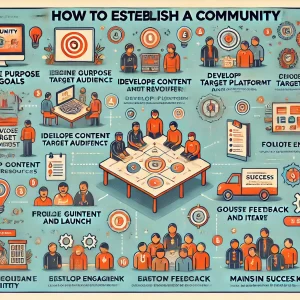
In today’s digital age, building an online community is essential for many brands, businesses, and individuals. An online community is a group of people who come together on the internet to share interests, ideas, and information. This community can be centered around a brand, product, or even a specific idea.
Importance of Building an Online Community
Creating a strong online community can enhance brand awareness, increase customer loyalty, and open new opportunities for interaction and growth. An engaged community not only supports the brand but also contributes to its development by providing valuable feedback and spreading positive word-of-mouth.
Choosing the Right Platform
Social Media Platforms
Selecting the right platform is crucial for building an online community. Social media platforms like Facebook, Instagram, and Twitter offer a broad reach and various tools to connect with your audience. Each platform has its own strengths; for example, Facebook is great for detailed discussions and event planning, while Instagram is perfect for visual content and engagement.
Forums and Private Groups
In addition to social media, forums and private groups can provide a more intimate setting for your community. Platforms like Reddit, Discord, and Slack allow for more focused discussions and can foster a sense of exclusivity among members. These platforms are ideal for communities that require in-depth conversations and closer interaction.
Defining Your Purpose and Target Audience
Audience Analysis
Understanding your target audience is the foundation of building an online community. Conduct thorough research to determine the demographics, interests, and pain points of your potential members. This information will guide your content and engagement strategies.
Setting Goals
Clearly define the purpose of your community and set achievable goals. Are you looking to build brand loyalty, provide customer support, or create a space for like-minded individuals to connect? Your goals will shape the direction and activities of your community.
Creating Valuable Content
Types of Content
Content is the lifeblood of any online community. Create a mix of content types, including blog posts, videos, infographics, and live streams. This variety keeps the community engaged and caters to different preferences.
Content Strategies
Develop a content strategy that aligns with your community’s interests and goals. Regularly post valuable and relevant content, and encourage members to contribute their own. User-generated content not only enriches the community but also increases engagement and loyalty.
Engaging with Members
Importance of Regular Engagement
Consistent engagement is key to maintaining an active and vibrant community. Respond to comments, ask questions, and participate in discussions. Show your members that their voices are heard and valued.
Methods to Boost Engagement
Use interactive content like polls, quizzes, and challenges to boost engagement. Host regular events such as webinars, Q&A sessions, and live chats to foster a sense of community and encourage participation.
Providing Support and Assistance
How to Offer Support
Provide timely and helpful support to your community members. Set up a dedicated support team or channel where members can ask questions and seek assistance. Be proactive in addressing issues and offering solutions.
Importance of Quick Responses
Quick responses demonstrate your commitment to the community and build trust. Aim to respond to queries and concerns within a short time frame. This not only helps individual members but also shows the entire community that you are attentive and reliable.
Encouraging Member Participation
Contests and Challenges
Organize contests and challenges to encourage participation and keep the community engaged. Offer incentives such as prizes, recognition, or exclusive content to motivate members to get involved.
Participation Rewards
Reward active members with badges, shout-outs, or access to special features. Recognizing and rewarding participation fosters a sense of belonging and encourages others to contribute.
Establishing Community Rules and Policies
Importance of Rules
Clear rules and policies help maintain order and ensure a positive environment for all members. Outline acceptable behavior, posting guidelines, and consequences for rule violations.
How to Set Policies
Develop policies that reflect the values and goals of your community. Communicate these policies clearly and consistently, and enforce them fairly to maintain trust and respect among members.
Measuring Success and Analyzing Performance
Measurement Tools
Use analytics tools to measure the success of your community. Track metrics such as member growth, engagement rates, and content performance to understand what works and what needs improvement.
Data Analysis
Regularly analyze the data to gain insights into your community’s behavior and preferences. Use this information to refine your strategies and enhance the overall community experience.
Growing and Expanding the Community
Growth Strategies
Implement strategies to grow your community, such as inviting new members, collaborating with other communities, and promoting your community through various channels. Focus on attracting quality members who align with your community’s values and goals.
Expanding the Member Base
Encourage current members to invite friends and colleagues. Offer incentives for referrals and make it easy for new members to join and get involved. A diverse and growing member base enriches the community and fosters new connections.
Dealing with Challenges
Common Challenges
Every community faces challenges such as member conflicts, low engagement, and spam. Identify common issues in your community and develop strategies to address them effectively.
Overcoming Obstacles
Proactively address challenges by setting clear guidelines, moderating discussions, and providing support. Engage with members to understand their concerns and find solutions collaboratively.
Maintaining Community Security
Security Policies
Implement robust security policies to protect your community from threats such as hacking, phishing, and harassment. Ensure that members’ personal information is secure and that they feel safe participating in the community.
Handling Inappropriate Behavior
Establish procedures for dealing with inappropriate behavior. This includes defining what constitutes unacceptable behavior, how to report it, and the actions that will be taken in response. Promptly address issues to maintain a respectful and positive environment.
Collaborating with Influencers
Importance of Influencers
Collaborating with influencers can significantly boost your community’s visibility and credibility. Influencers bring their followers and lend their expertise, enhancing the community’s value.
How to Collaborate with Them
Identify influencers who align with your community’s values and interests. Approach them with collaboration proposals that offer mutual benefits, such as co-hosting events, creating content, or promoting each other’s activities.
Keeping the Community Active
Ideas to Maintain Activity
Keep the community vibrant by regularly introducing new activities and content. This can include themed discussions, member spotlights, guest speakers, and collaborative projects.
Avoiding Stagnation
Monitor the community for signs of stagnation, such as reduced activity or disengagement. Address these issues promptly by introducing fresh ideas and encouraging members to participate actively.
Conclusion
Summary of Key Points
Building an online community involves careful planning, consistent engagement, and ongoing support. By choosing the right platform, creating valuable content, and fostering a positive environment, you can develop a thriving community that supports your goals.
Future Outlook
As your community grows, continue to adapt and evolve to meet the needs of your members. Stay responsive to feedback, embrace new technologies, and remain committed to providing value. A strong online community can be a powerful asset that drives growth, loyalty, and success.
FAQs
How do I choose the right platform for my online community?
Consider the type of engagement you want, your target audience, and the features offered by different platforms. Social media platforms offer broad reach, while forums provide more focused discussions.
What types of content should I create for my community?
A mix of blog posts, videos, infographics, and live streams can keep your community engaged. Regularly update your content to maintain interest.
How can I increase engagement in my community?
Engage regularly, respond to comments, ask questions, and use interactive content like polls and challenges. Host events to encourage participation.
What should I do if my community faces challenges?
Identify common issues and develop strategies to address them. Set clear guidelines, provide support, and engage with members to find solutions.
How can I keep my community secure?
Implement security policies, protect members’ personal information, and establish procedures for handling inappropriate behavior. Ensure members feel safe and respected.
Digital marketing has come a long way since the early days of the internet. From simple banner ads to sophisticated, data-driven campaigns, the landscape has continuously evolved. In today’s fast-paced world, staying updated with the latest trends and technologies is crucial for businesses to thrive. So, what’s on the horizon for digital marketing? Let’s dive into the future and explore what lies ahead.
Current Trends in Digital Marketing
Personalization and Customer Experience
Personalization has become a cornerstone of effective digital marketing. Consumers now expect tailored experiences that cater to their individual needs and preferences. By leveraging data analytics, businesses can create highly personalized content, offers, and recommendations, enhancing the overall customer experience.
Video Content Dominance
Video content continues to dominate the digital landscape. Platforms like YouTube, TikTok, and Instagram Reels are immensely popular, and video marketing is proving to be a powerful tool for engagement. Short-form videos, live streaming, and interactive content are set to grow even more in importance.
Voice Search Optimization
With the rise of smart speakers and voice assistants like Alexa, Siri, and Google Assistant, optimizing for voice search is becoming essential. Voice search queries are often more conversational and longer than text searches, requiring a different approach to SEO.
Artificial Intelligence and Machine Learning
AI-Driven Analytics
Artificial Intelligence (AI) is revolutionizing digital marketing. AI-driven analytics can process vast amounts of data quickly, providing valuable insights into consumer behavior and campaign performance. This allows marketers to make data-informed decisions and optimize their strategies in real-time.
Chatbots and Customer Service
Chatbots powered by AI are transforming customer service. They can handle routine inquiries, provide instant responses, and improve customer satisfaction. As AI technology advances, chatbots are becoming more sophisticated, offering personalized and human-like interactions.
Predictive Marketing
Predictive marketing uses machine learning to forecast future consumer behavior. By analyzing historical data, marketers can anticipate trends, identify potential leads, and tailor their campaigns accordingly. This proactive approach helps in staying ahead of the competition.
The Role of Big Data
Data-Driven Decision Making
Big data is at the heart of modern digital marketing. By analyzing massive datasets, businesses can uncover patterns and trends that inform their strategies. Data-driven decision-making leads to more effective and efficient marketing efforts.
Consumer Insights and Analytics
Understanding consumer behavior is crucial for crafting successful marketing campaigns. Big data provides deep insights into customer preferences, purchase history, and online behavior, enabling marketers to create targeted and relevant content.
Enhancing Customer Targeting
With the help of big data, marketers can segment their audiences more precisely. This enhanced targeting allows for personalized marketing messages that resonate with specific groups, increasing the chances of conversion.
Social Media’s Continuing Influence
Rise of Social Commerce
Social media platforms are evolving into shopping destinations. Features like Instagram Shopping and Facebook Marketplace enable users to purchase products directly through social media. This trend is blurring the lines between social media and e-commerce.
Influencer Marketing Evolution
Influencer marketing is maturing, with a shift towards authenticity and long-term partnerships. Micro-influencers, who have smaller but highly engaged audiences, are becoming more valuable to brands looking to build genuine connections with consumers.
The Power of User-Generated Content
User-generated content (UGC) is a powerful marketing tool. Encouraging customers to share their experiences and reviews not only builds trust but also provides authentic content that resonates with potential buyers.
Content Marketing’s Future
Quality Over Quantity
The focus of content marketing is shifting from quantity to quality. High-quality, valuable content that addresses the needs and pain points of the audience is more effective in building trust and authority.
Interactive Content
Interactive content, such as quizzes, polls, and interactive videos, is gaining traction. It engages users in a more meaningful way, encouraging participation and increasing time spent on a brand’s website or app.
Ephemeral Content
Ephemeral content, like Instagram Stories and Snapchat Snaps, is temporary and disappears after a short period. This type of content creates a sense of urgency and exclusivity, prompting immediate engagement from users.
SEO and SEM Advancements
Voice Search and SEO
As mentioned earlier, voice search is changing the way people search for information online. Marketers need to optimize their content for voice queries, which often involve natural language and question-based phrases.
AI in Search Engine Algorithms
Search engines are incorporating AI to improve search results. Understanding how these algorithms work and adapting SEO strategies accordingly is essential for maintaining visibility and ranking high on search engine results pages (SERPs).
The Role of Video in SEO
Video content is not only engaging but also beneficial for SEO. Including videos on landing pages and blog posts can increase dwell time and reduce bounce rates, both of which are factors that search engines consider when ranking websites.
Mobile Marketing Innovations
Growth of Mobile Commerce
Mobile commerce (m-commerce) is on the rise, with more consumers using their smartphones to shop online. Optimizing websites and apps for mobile devices is crucial for providing a seamless shopping experience.
Mobile-First Indexing
Google’s mobile-first indexing means that the mobile version of a website is considered the primary version for ranking purposes. Ensuring that your website is mobile-friendly is more important than ever.
Location-Based Marketing
Location-based marketing uses GPS data to target consumers based on their physical location. This approach can deliver highly relevant and timely offers, driving foot traffic to brick-and-mortar stores.
Augmented Reality (AR) and Virtual Reality (VR)
AR in Advertising
Augmented Reality (AR) is being used to create immersive advertising experiences. For example, AR allows customers to visualize products in their own space before making a purchase, enhancing the decision-making process.
VR Experiences for Customers
Virtual Reality (VR) offers unique opportunities for creating engaging and memorable customer experiences. VR can be used for virtual tours, product demonstrations, and even virtual events, providing an interactive way to connect with customers.
Future Possibilities
The potential applications of AR and VR in digital marketing are vast. As the technology becomes more accessible and advanced, we can expect to see even more innovative uses in advertising and customer engagement.
The Impact of 5G Technology
Faster Internet Speeds
5G technology promises significantly faster internet speeds, which will enhance the delivery of digital content. This improvement will lead to better user experiences, particularly for video streaming and interactive content.
Enhanced Mobile Experiences
With 5G, mobile experiences will become smoother and more responsive. This technology will enable more complex and data-intensive applications, such as AR and VR, to run seamlessly on mobile devices.
New Opportunities for Marketers
The capabilities of 5G open up new opportunities for digital marketers. From real-time data collection to advanced mobile advertising, 5G will provide the tools needed to create more dynamic and engaging marketing campaigns.
Ethical Considerations in Digital Marketing
Data Privacy Concerns
As data collection becomes more sophisticated, so do concerns about privacy. Marketers must prioritize data security and transparency, ensuring that consumers’ information is protected and used ethically.
Transparency and Trust
Building trust with consumers is paramount. Transparent business practices and honest communication help establish credibility and foster long-term relationships with customers.
Ethical Advertising Practices
Ethical advertising involves promoting products and services truthfully and responsibly. Avoiding misleading claims and respecting consumer rights are key components of ethical marketing.
The Shift Towards Sustainability
Green Marketing
Sustainability is becoming a significant consideration for consumers. Green marketing focuses on promoting environmentally friendly products and practices, appealing to eco-conscious customers.
Sustainable Branding
Brands that prioritize sustainability can differentiate themselves in the market. By adopting sustainable practices and communicating these efforts to consumers, companies can build a positive brand image.
Consumer Demand for Ethical Practices
Consumers are increasingly demanding ethical business practices. Companies that demonstrate a commitment to social and environmental responsibility are more likely to earn customer loyalty.
The Importance of Omnichannel Marketing
Seamless Customer Experiences
Omnichannel marketing aims to provide a seamless experience across all customer touchpoints. Whether online or offline, the goal is to create a consistent and cohesive journey for the customer.
Integrating Online and Offline Channels
Effective omnichannel strategies integrate online and offline channels, ensuring that customers can transition smoothly between them. This integration enhances the overall customer experience and drives higher engagement.
Consistent Messaging
Consistency in messaging is crucial for brand recognition and trust. Omnichannel marketing ensures that the brand’s voice and message remain uniform across all platforms and interactions.
Preparing for the Future
Continuous Learning and Adaptation
The digital marketing landscape is constantly changing. Staying ahead requires continuous learning and adaptation to new trends and technologies. Marketers should be proactive in seeking out new knowledge and skills.
Leveraging Emerging Technologies
Embracing emerging technologies is key to staying competitive. From AI and big data to AR and 5G, leveraging these tools can enhance marketing strategies and drive innovation.
Building a Future-Proof Strategy
A future-proof digital marketing strategy is flexible and adaptable. It involves staying informed about industry developments, being open to change, and continuously refining approaches to meet evolving consumer needs.
Conclusion
The future of digital marketing is bright and full of exciting possibilities. From AI and big data to AR and 5G, new technologies are set to transform the way we connect with consumers. By staying informed, embracing innovation, and prioritizing ethical practices, businesses can navigate the ever-changing digital landscape and achieve long-term success.
FAQs
What is the role of AI in digital marketing? AI plays a crucial role in digital marketing by providing advanced analytics, improving customer service through chatbots, and enabling predictive marketing.
How is voice search impacting SEO? Voice search is changing SEO by requiring optimization for natural language and question-based queries, which differ from traditional text searches.
Why is personalization important in digital marketing? Personalization enhances the customer experience by delivering tailored content and recommendations, leading to higher engagement and conversion rates.
What are the benefits of AR and VR in marketing? AR and VR offer immersive and interactive experiences, allowing customers to visualize products and engage with brands in innovative ways.
How can businesses ensure ethical digital marketing practices? Businesses can ensure ethical practices by prioritizing data privacy, being transparent with consumers, and promoting products truthfully and responsibly.
In the fast-paced world of digital marketing, capturing the attention of potential customers is only half the battle. The real challenge lies in converting that interest into action. This is where retargeting comes into play. Retargeting, also known as remarketing, is a powerful strategy that allows businesses to re-engage with users who have previously visited their website or interacted with their brand. By serving personalized ads to these warm leads as they browse other sites, businesses can significantly increase their conversion rates, boost brand recall, and ultimately drive more sales. In this blog post, we’ll delve into some of the most effective retargeting tactics and how you can leverage them to enhance your marketing efforts.
What is Retargeting and Why is it Important?
Retargeting, or remarketing, is a digital marketing technique designed to re-engage visitors who have previously interacted with your website or mobile app. Unlike traditional advertising methods that target new audiences, retargeting focuses on individuals who have already shown interest in your products or services, making them more likely to convert.
Importance of Retargeting:
Increased Conversion Rates: By targeting users who are already familiar with your brand, retargeting can significantly boost conversion rates.
Enhanced Brand Recall: Consistent exposure to your brand through retargeting ads keeps your business top of mind for potential customers.
Cost-Effectiveness: Retargeting is often more cost-effective than acquiring new customers through standard advertising methods.
Personalization: Tailored ads based on user behavior and preferences lead to more engaging and relevant ad experiences.
Powerful Retargeting Tactics
Implementing effective retargeting tactics can make all the difference in turning potential customers into actual buyers. Here are some of the most powerful retargeting strategies:
1. Dynamic Retargeting
Dynamic retargeting involves displaying ads featuring the specific products or services that a user viewed on your site. This personalized approach increases the likelihood of conversion as the ads are directly relevant to the user’s interests.
2. Segmented Retargeting
Segment your audience based on their behavior on your site. For instance, create separate retargeting lists for users who viewed a product, added items to their cart, or completed a purchase. This allows for more targeted and relevant ads.
3. Email Retargeting
Leverage your email lists to retarget users with personalized ads. If a user has provided their email but hasn’t completed a purchase, send them customized ads reminding them of the products they showed interest in.
4. Cross-Platform Retargeting
Ensure your retargeting ads reach users across multiple devices, including desktops, mobiles, and tablets. Consistent messaging across platforms can enhance the user’s journey and increase the chances of conversion.
5. Sequential Retargeting
Deliver a series of ads in a specific sequence to guide users down the conversion funnel. Start with an awareness ad, followed by consideration, and finally, a conversion-focused ad.
6. Use of Creative and Offers
Experiment with different ad creatives and special offers to see what resonates best with your audience. Limited-time discounts or special promotions can incentivize users to make a purchase.
Measuring the Success of Retargeting Campaigns
To ensure your retargeting efforts are effective, it’s crucial to track and measure the success of your campaigns. Here are some key metrics and tools to consider:
Key Metrics:
Click-Through Rate (CTR): Measures the number of clicks your retargeting ad receives relative to its number of impressions.
Conversion Rate: The percentage of users who complete a desired action, such as making a purchase, after clicking on your ad.
Cost Per Acquisition (CPA): The cost associated with acquiring a customer through your retargeting efforts.
Return on Ad Spend (ROAS): The revenue generated for every dollar spent on retargeting ads.
Frequency: The number of times your ad is shown to the same user. Finding the optimal frequency is essential to avoid ad fatigue.
Tools for Measurement:
Google Analytics: Offers detailed insights into user behavior and campaign performance.
Facebook Ads Manager: Provides metrics specific to Facebook retargeting campaigns.
AdRoll: A comprehensive tool for tracking and optimizing retargeting efforts across various platforms.
Common Mistakes to Avoid in Retargeting Campaigns
While retargeting can be highly effective, there are common pitfalls that can hinder your success. Avoid these mistakes to ensure your campaigns are as impactful as possible:
1. Overexposure
Showing the same ad too many times can lead to ad fatigue, causing users to become annoyed or ignore your ads. Monitor ad frequency and adjust accordingly.
2. Ignoring Segmentation
Failing to segment your audience can result in irrelevant ads that don’t resonate with users. Always segment your retargeting lists based on user behavior and preferences.
3. Poor Ad Creative
Generic or unappealing ad designs can decrease engagement. Invest in high-quality visuals and compelling copy to capture user interest.
4. Lack of A/B Testing
Not testing different versions of your ads means missing out on valuable insights into what works best. Continuously test and optimize your ad creatives and strategies.
5. Neglecting to Exclude Converters
Ensure you exclude users who have already converted from your retargeting lists to avoid wasting ad spend and irritating your customers.
Case Studies and Examples of Successful Retargeting Campaigns
Learning from successful retargeting campaigns can provide valuable insights and inspiration for your own efforts. Here are some notable examples:
AdRoll and Retargeting
AdRoll has helped numerous clients achieve success with retargeting by focusing on dynamic ads and personalized campaigns. For instance, a clothing retailer saw a 30% increase in conversions by using AdRoll’s dynamic retargeting to display products users had viewed.
BigCommerce
BigCommerce showcases several eCommerce stores that have significantly increased their sales by targeting cart abandoners. By retargeting users who left items in their carts with personalized ads and special offers, these stores were able to recover lost sales and boost revenue.
WordStream
WordStream highlights small businesses that have doubled their conversions through segmented and sequential retargeting strategies. By delivering relevant ads to users at different stages of the buying journey, these businesses achieved remarkable results.
Conclusion
Retargeting is a vital component of any comprehensive digital marketing strategy. By implementing powerful retargeting tactics, measuring campaign success, avoiding common pitfalls, and learning from successful case studies, you can significantly enhance your marketing efforts and drive more conversions. Start applying these strategies today and watch your business grow.