
Creating content consistently can feel overwhelming. Many creators struggle with daily posting, last-minute ideas, and burnout. The good news is — you don’t have to create content every day.
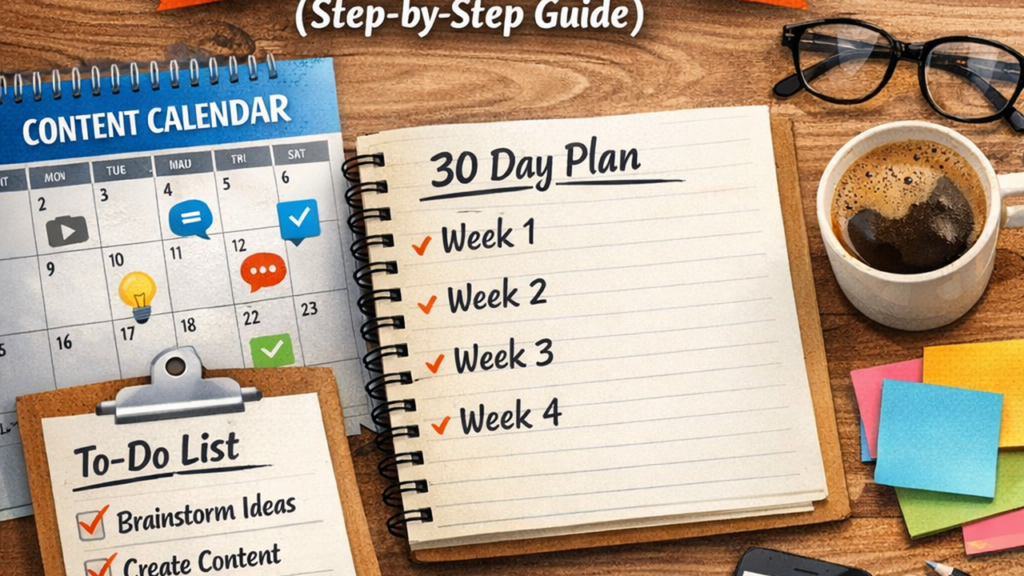
With the right system, you can plan an entire month of content in just one focused session. This method is called content batching, and it helps you stay consistent while saving time and mental energy.
In this guide, you’ll learn a simple step-by-step system to plan 30 days of content in one sitting.
Why Planning Content in Advance Matters
Before jumping into the process, it’s important to understand why content planning works so well.
Planning ahead helps you:
- Stay consistent with posting
- Reduce daily stress and decision fatigue
- Create higher quality content
- Maintain a clear brand message
- Save time and increase productivity
Creators who batch their content often grow faster because they focus on strategy instead of scrambling for daily ideas.
Step 1: Choose Your Content Pillars
Content pillars are the main topics your brand focuses on. They help organize your content and ensure your audience understands what you offer.
Most successful creators use 3 to 5 content pillars.
Example Content Pillars
- Education or tips
- Personal stories or experiences
- Product or service promotion
- Entertainment or engagement posts
- Testimonials or success stories
Choose pillars that align with your audience and business goals.
Step 2: Brainstorm Content Ideas
Now that you have your pillars, it’s time to generate content ideas.
The easiest method is the 10 Ideas Per Pillar Rule.
If you have 3 pillars:
- 3 pillars × 10 ideas = 30 content ideas
Brainstorming Tips
- Answer common audience questions
- Share beginner mistakes
- Explain tools or strategies
- Break down step-by-step tutorials
- Share personal lessons or experiences
Write everything down without overthinking. The goal is quantity first — quality comes later.
Step 3: Choose Content Formats
Using different formats keeps your content interesting and helps you reach a wider audience.
Common formats include:
- Short videos (Reels, Shorts, TikTok)
- Carousel posts
- Educational single posts
- Stories
- Long-form videos or blog posts
You can rotate formats throughout the month to keep your content balanced.
Step 4: Create a Simple Content Calendar
Now organize your ideas into a monthly schedule.
You don’t need complicated tools. A simple table works perfectly.
Example Weekly Structure
Monday: Educational content
Tuesday: Story or personal experience
Wednesday: Tips or tutorial
Thursday: Engagement post
Friday: Product or service promotion
Weekend: Light or entertaining content
Repeat this structure weekly until you fill 30 days.
Step 5: Outline Each Content Piece
Instead of fully creating content during planning, focus on outlining.
For each post, write:
- Topic
- Hook or opening idea
- Main message
- Call to action
This makes filming or designing content much faster later.
Step 6: Batch Create Your Content
Once your calendar and outlines are ready, you can batch create content.
You can divide batching into:
- Filming day
- Editing day
- Caption writing day
- Scheduling day
Batching reduces setup time and helps you stay in a creative flow.
Step 7: Schedule and Automate Posting
Use scheduling tools like:
Scheduling allows your content to post automatically, giving you more time to focus on engagement and business growth.
Pro Tips for Faster Content Planning
- Reuse and repurpose top performing content
- Turn long content into multiple short posts
- Keep an idea bank for future content
- Track analytics to see what works best
- Use templates to speed up design and writing
Common Content Planning Mistakes to Avoid
Many creators make these mistakes:
- Trying to be perfect instead of consistent
- Creating content without strategy
- Ignoring audience feedback
- Posting randomly without scheduling
- Overcomplicating the planning process
Remember, consistency beats perfection every time.
Final Thoughts
Planning 30 days of content in one sitting is one of the smartest strategies for creators and business owners. It reduces stress, improves consistency, and allows you to focus on growth instead of daily content pressure.
Start simple, stay consistent, and improve your system each month. Over time, content planning will become faster and easier.